People are becoming more aware of their surroundings and re-recognizing the value that nature brings to one’s health and well-being. People want to be close to parks, to live in communities to which they contribute, and which give back to them. “Being close to parks” is one of the most important criteria for many of my buyer clients …
Remember the recent study about how cities hurt our brains (no longer available)?
“The mind is a limited machine,”says Marc Berman, a psychologist at the University of Michigan and lead author of a new study that measured the cognitive deficits caused by a short urban walk. “And we’re beginning to understand the different ways that a city can exceed those limitations.”
One of the main forces at work is a stark lack of nature, which is surprisingly beneficial for the brain. Studies have demonstrated, for instance, that hospital patients recover more quickly when they can see trees from their windows, and that women living in public housing are better able to focus when their apartment overlooks a grassy courtyard. Even these fleeting glimpses of nature improve brain performance, it seems, because they provide a mental break from the urban roil.
cVillain embedded the study in their post (no longer available).
Omninerd says it better than I could …
The key, then, is to find ways to mitigate the psychological damage of the metropolis while still preserving its unique benefits. One solution to this problem is better urban planning—more green space. Not just the savannah-like parks we consistently build, but ones that involve multiple aspects of nature; from towering oaks to ivy-like ground cover and ponds teeming with life from the microscopic to the leaping bass chasing gizzard shad for lunch. Then, we humans must take advantage of these places to relax and recharge.
This seems to be just the sort of thing that Charlottesville would embrace. You can register for the event here.
Disclosure: What follows after the jump is an invitation/advertisement to a symposium that is being put together by a friend. I think that this is a very pertinent event, particularly in today’s society.
Richard J. Dolesh (no longer available)
Richard Dolesh is the Senior Director of Public Policy for the National Recreation and Park Association in Washington, D.C.
The Role of Public Parks in Connecting Children and Families to Nature
Public parks play a critical role in providing the places where children and families can connect with nature. Across the nation, public park and recreation agencies are coming up with creative and interesting solutions to providing safe access, interpretive and educational programs, natural playscapes, and exciting interesting ways that kids can discover and enjoy nature. But at the same time, public park agencies are on the front lines of grappling with risk management issues, liability concerns, public safety concerns and a lack of staff and budget to meet public expectations.
Rich will provide an overview of what is happening across the country in public park and recreation agencies, and share his perspective of what the challenges-and the potential–for public parks in connecting kids to nature
Tim Beatley (no longer available)
Timothy Beatley is Teresa Heinz Professor of Sustainable Communities, in the Department of Urban and Environmental Planning, School of Architecture at the University of Virginia, where he has taught for the last eighteen years.
Biophilic Cities: Strategies for Re-inviting Nature into Our Lives and Communities
Beatley will describe steps communities and cities can take to re-integrate and rediscover the nature in and around them, and to create conditions where adults and children alike have daily contact with outdoor nature. From vertical green gardens to stream daylighting to community forests and city farms, Beatley will describe innovative green practice from around the world and what might be applied here in Charlottesville. Beatley will also discuss work on his forthcoming documentary the Nature of Cities, and will premiere a 12-minute trailer for the film.
Nilda Cosco (no longer available)
Nilda Cosco, PhD, Research Associate Professor and Education Specialist, the Natural Learning Initiative, College of Design, North Carolina State University.
The “purple thing” and other stories
Spontaneous interaction with the living environment encourages curiosity, and the desire to know about plants, animals, and natural processes. Explorations improve cooperation, strategic thinking, language, and stimulate the naturalistic intelligence. Diverse environments accommodate the needs of different learning abilities. This presentation will feature play sequences observed in naturalized play areas.
Tim Gill
Tim Gill, Writer and consultant, MA Philosophy, London University
What if…?
Children, public space and risk
Children across the developed world are leading ever more constrained and supervised lives. As a result too many are unfit, unhappy and disconnected from the people and places around them.
There is a small but growing movement to reshape neighbourhoods and create more child-friendly communities. But one of the biggest barriers to progress is a pervasive yet rarely examined climate of fear. The question ‘what if…?’ can paralyse parents, educators, designers and policy makers. The mere suggestion of the threat of litigation can kill off creativity and innovation, and lead all concerned to revert to the ‘safest’ option.
Drawing on his extensive experience from the UK, and his worldwide perspective, Tim will explore how we can overcome our anxieties, face up to the lawyers and build places that give children the freedom to learn through living.
Robin Moore
Robin Moore, Dipl.Arch, MCP, Professor of Landscape Architecture
Director, Natural Learning Initiative, North Carolina State University.
Naturalizing Everyday Spaces for Healthy Childhoods – by Design
Moore will briefly review scientific findings that support the importance of outdoor play in natural surroundings for children, particularly in early and middle childhood. He will focus on design strategies for integrating nature into the places where children spend daily time: childcare centers, schools, neighborhood parks, and residential neighborhoods. The role of the new profession of playwork will be introduced. Case studies, including community destinations such as children’s museums, zoos, and botanical gardens, will demonstrate how designed natural settings can provide a shared sense of community and source of social capital.
Interested in Learning More?
I have been been representing buyers and sellers in Charlottesville, Albemarle, and Central Virginia since 2001. Get local insight born of experience.
Dig Deeper
A Charlottesville e-bike Success Story
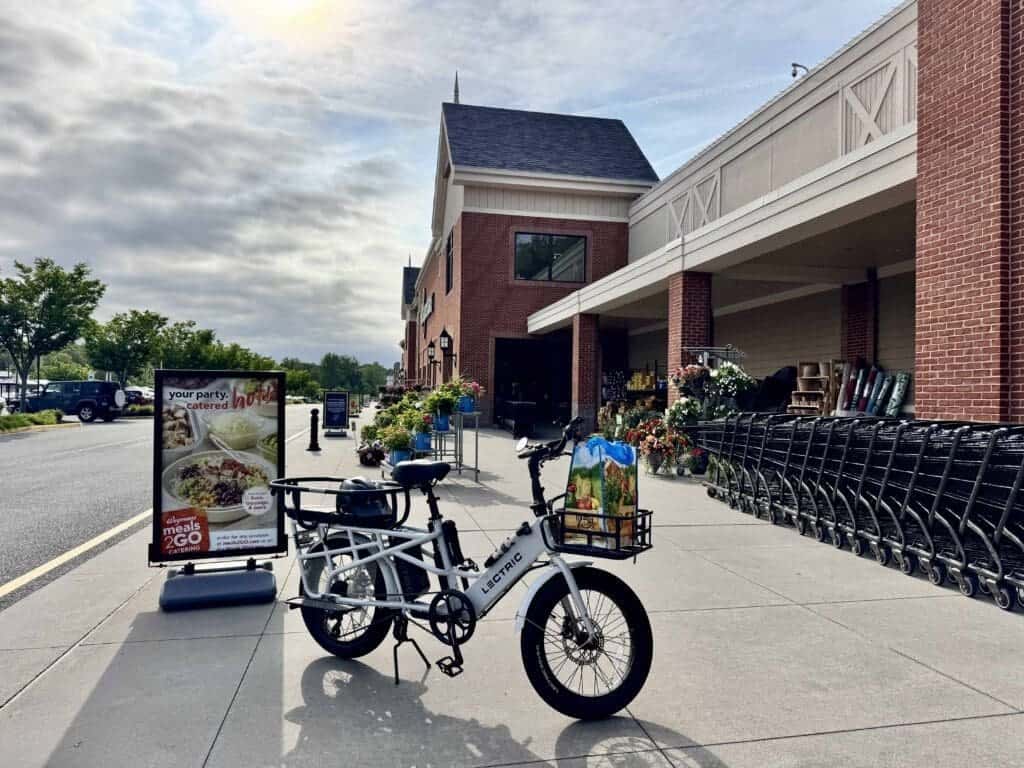
I have an e-bike. I love my e-bike. I ride it to meetings all over the City of Charlottesville instead of driving my car. e-bikes are great. A friend got an e-bike. He loves his e-bike. He has a different perspective, and I asked him…
e-bikes are good
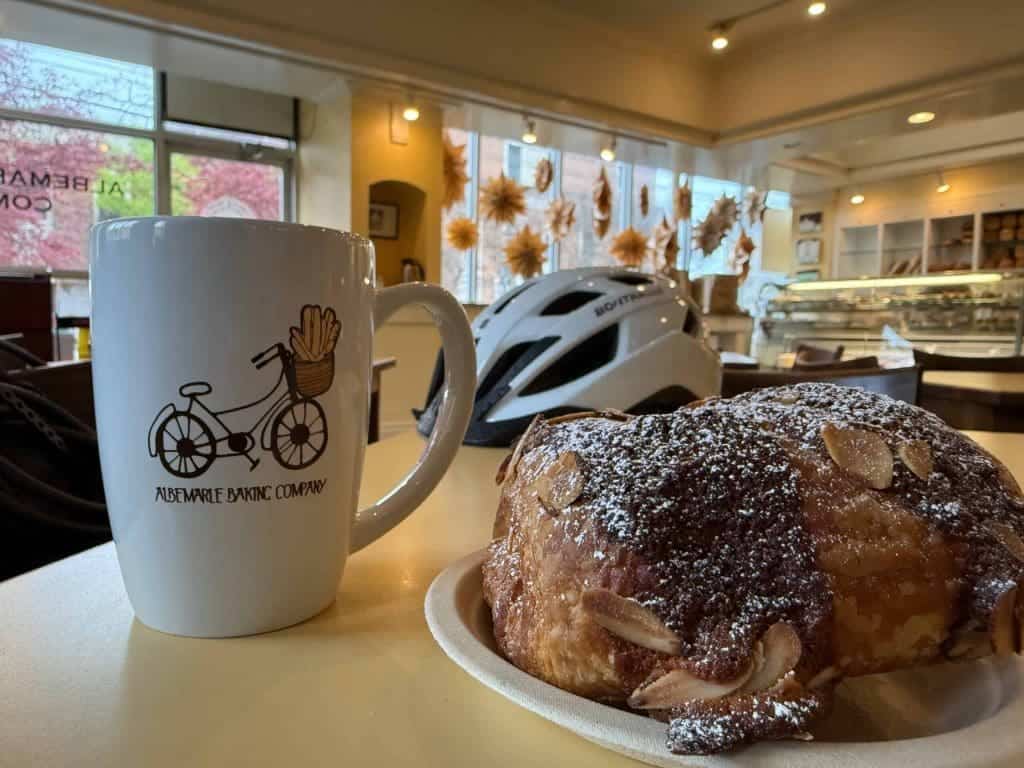
"I want to get an e-bike." The mobility just seems incredible." And it is. A friend made that comment recently on one of my Strava e-bike commuting rides. It's possible to ride an e-bike around Charlottesville and the immediate urban ring of Albemarle County. Mostly…
When Will Homes Come on the Market in Charlottesville and Albemarle in 2026?
When will homes come on the market in Charlottesville and Albemarle in 2026? The Charlottesville real estate cycle has bee fairly consistent over the years. In 2023, I wrote a similar story to this one. The biggest two changes between 2023 and 2026* are: interest…
Developers Have Long-Term Vision
Developers think and plan long-term. Generally. An example. Many years ago, I represented sellers of a piece up land up 29 North. It was a relatively small piece of land, and we received an offer pretty quickly for asking price. About twenty years later, all…