I have long been an advocate of some form of efficient mass transit in our region. This discussion over at Slashdot sheds some light on why the monorail project in Seattle appears to be coming to a crashing halt.
Is mass transit economically feasible? I’m still working on researching this, but conventional wisdom dictates that no form of public transportation is operable unless there is some form of government subsidy. My naive thought is that we may be nearing the Tipping Point where substantially increased fuel costs will necessitate alternative modes of transportation.
An interesting out-take from the discussion –
The reason I suspect is that “old world” cities are far better suited for mass transit in the first place. Cities like New York, Boston and European cities were developed when transportation mostly consisted of walking. As a result, these cities tended to emphasize a “build up, not out” approach to development resulting in more compact cities realtive (sic) to their size.
Then came the concept of Suburbia….country living for everyone. Automobiles became affordable and cities started to sprawl. Now you have cities like Atlanta, LA, etc who occupy a far larger land area relative to their population then older cities. This means that building a mass transit network becomes far more expensive to build and maintain. It also means that unless it’s a fairly comprehensive network (even more expensive) it’s ridership will be relatively low.
We’re not ready yet to address mass-transit or the requisite land-use policies and issues that are involved. Urban sprawl and all that it entails ensures that urban transit will be expensive, whether using fossil fuels or mass transit.
This is a succinct indictment of government that is applicable almost anywhere you look. I’m not advocating their tactics, but I’m just saying …
Another reason why Chicago, New York, and Boston have such wide reaching transit systems, particularly NYC, is because the companies that built them (a) Didn’t wait for decades to get public approval, and (b) Said companies, if confronted on the subject, would quickly grease the palms of the politicians in charge to ensure they could continue work uninterrupted.
Back when they were building the subways in Manhattan, the construction was literally tearing up all the streets, dynamite used in the tunnelling would occasionally explode and kill bystanders, and buildings would occasionally collapse. Hardly what the public would put up with nowadays, nor politicians looking for reelection, but the systems were *built*. In later decades, the companies that built those subway systems went bankrupt, and the city took over the transit systems. Major corporations may be all evil and bad and junk, but the ineptitude of government is criminal in scale.
This and this (no longer available) are two of the more interesting parts of the discussion.
In my opinion, mass transit implementation is a matter of time. How and when we get there remain a matter of debate. Mass transit will most likely drastically impact real estate values (in a positive way), as this blog noted a while ago.

Interested in Learning More?
I have been been representing buyers and sellers in Charlottesville, Albemarle, and Central Virginia since 2001. Get local insight born of experience.
Dig Deeper

Always Read Covenants and Restrictions
You never know what you're going to find when you dig into Covenants and Restrictions. "1. No shop, store, trailer, temporary living structure, factory, hospital, asylum, institution, tourist home or business house of any kind, and no apartment house shall be erected or maintained on…

Revisiting the “0 to 5 Buyer is Gone” Post – 15 years later
Revisiting the “0-5 Buyer Is Gone” Theory We’re in a different market now. Some of the people who bought between 2021 and 2024 are trying to sell — and the ones who bought new construction, now competing against new construction, are having a hard time.…
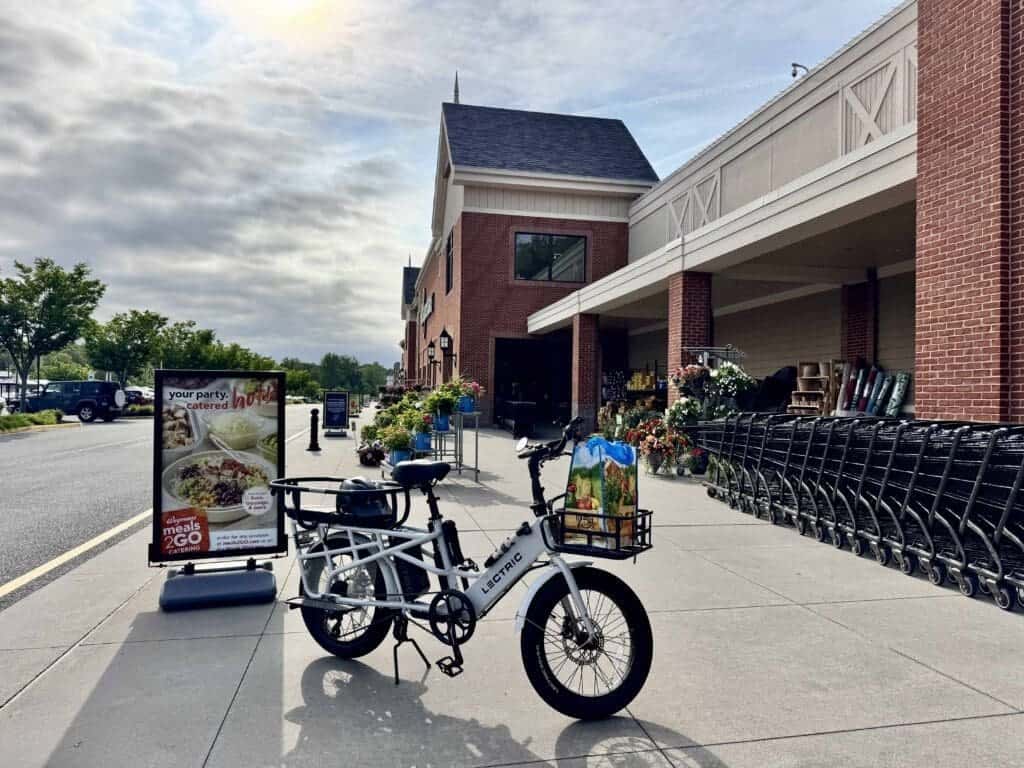
A Charlottesville e-bike Success Story
I have an e-bike. I love my e-bike. I ride it to meetings all over the City of Charlottesville instead of driving my car. e-bikes are great. A friend got an e-bike. He loves his e-bike. He has a different perspective, and I asked him…

Flipping the Switch, Part 3: ADUs, Zoning, and the Practical Guide
Flipping the Switch, Part 3: ADUs, Zoning, and the Practical Guide Part 1 covered the data. Part 2 covered the design. This week: the regulatory landscape, the ADU reality check, and the practical checklist. The ADU Conversation Has Changed When I wrote about this in…