The Center for Housing Policy has released a fascinating report titled: A Heavy Load: The Combined Housing and Transportation Burdens of Working Families (PDF) (archived: 2017). It’s 32 pages long, so I have not had time yet to fully digest it, but the premise is fairly commonsense: It typically costs less to live farther from urban centers. Gas costs money. Driving farther costs more money.
As I have noted before, important and clear parallels may be drawn between the Central Virginia and the Northern Virginia market:
Among the regions studied,the Washington,D.C.–Baltimore has one of the least affordable housing markets. Both housing costs and housing as a share of income are especially high among the region’s outer suburban and suburban fringe areas.Except for married couples with children who bear the brunt ofthese high costs, Working Families are more likely to live in central city and inner suburban neighborhoods where housing costs and cost burdens are somewhat lower. Public transit is heavily used within Washington,D.C.’s Metro corridors. Everywhere else,however, the auto is consistently favored by Working Family commuters. This is as true in central city neighborhoods as it is on the suburban fringe.
In our market, by contrast, many of those in the City have taken advantage of the recent housing boom and sold their houses and moved out into th Counties. Some have been driven out by increasing rent prices. We don’t have efficient public transportation from outside the urban ring. Locally, just look at the numbers of people who are commuting into Charlottesville/Albemarle (CharlAlbemarle!) (no longer available).
These are a few of the stories from my feed reader about this story:
Bacon’s Rebellion
Business Week
Commenter EM Risse notes on Bacon’s Rebellion:
Of course, as we all know by now, Autonomobility is a dead end. But shared-vehicle systems (aka, “mass transit”) cannot overcome random distribution of origins and destinations.
For this reason, studies such as Albemarle’s recent one on residents’ opinions regarding growth serve only to perpetuate the myopic view which local governments continue to reinforce. Unless there is region-wide cooperation, transportation will remain as inefficient as it is today – and will only get worse.

Interested in Learning More?
I have been been representing buyers and sellers in Charlottesville, Albemarle, and Central Virginia since 2001. Get local insight born of experience.
Dig Deeper

Always Read Covenants and Restrictions
You never know what you're going to find when you dig into Covenants and Restrictions. "1. No shop, store, trailer, temporary living structure, factory, hospital, asylum, institution, tourist home or business house of any kind, and no apartment house shall be erected or maintained on…

Revisiting the “0 to 5 Buyer is Gone” Post – 15 years later
Revisiting the “0-5 Buyer Is Gone” Theory We’re in a different market now. Some of the people who bought between 2021 and 2024 are trying to sell — and the ones who bought new construction, now competing against new construction, are having a hard time.…
A Charlottesville e-bike Success Story
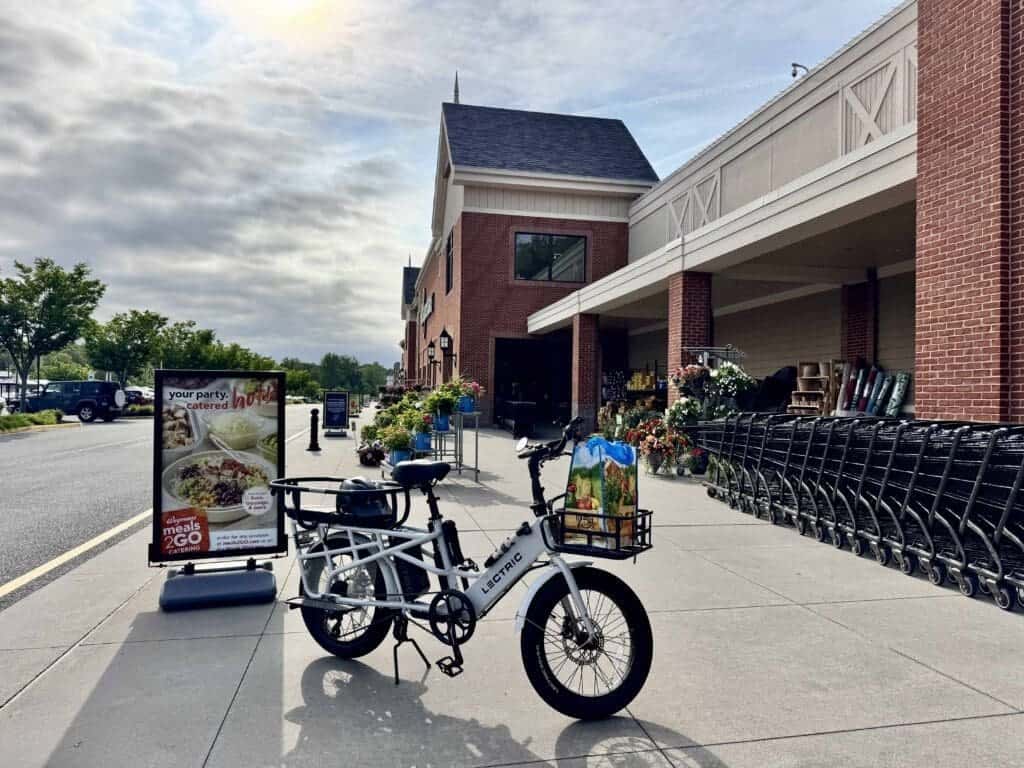
I have an e-bike. I love my e-bike. I ride it to meetings all over the City of Charlottesville instead of driving my car. e-bikes are great. A friend got an e-bike. He loves his e-bike. He has a different perspective, and I asked him…

Flipping the Switch, Part 3: ADUs, Zoning, and the Practical Guide
Flipping the Switch, Part 3: ADUs, Zoning, and the Practical Guide Part 1 covered the data. Part 2 covered the design. This week: the regulatory landscape, the ADU reality check, and the practical checklist. The ADU Conversation Has Changed When I wrote about this in…