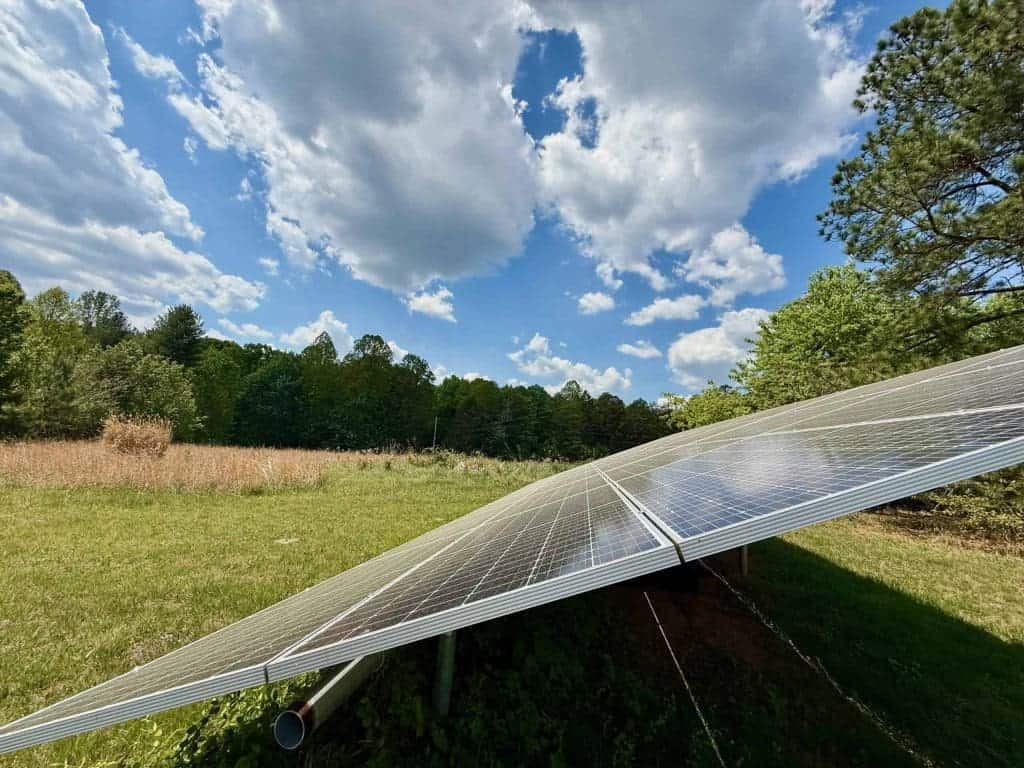
We can value solar panels.
- “Is the system owned or leased?”
- “Are the warranties and Net Metering agreements transferable?”
- “How old is the roof underneath the panels?”
How do you value not being fully dependent on the grid?
I was meeting a photographer at a new listing in Southern Albemarle recently. My client has a Tesla. Photographer pulls up in his Lightning. My client asks, “do you want to charge up? It’s free.”
I asked my client to tell me a story about how having solar power affected their lives.
The solar array and battery back-up systems will slide into your life like they’ve always been there. It’s the sort of modern convenience that, once you have it, you wonder why you didn’t always have it. It’s such an obvious improvement over the “old” way of doing things. Three features of the system make it this way: net metering, battery back-up system, and the SREC marketplace. All of this is entirely automated: you don’t need to lift a finger for any of it to benefit from all of it, except to put the system in your name once the purchase closes, and if the power goes out during the winter — but see below.
First, net metering means that for every kWh you generate, Appalachian Electric Power credits you one kWh to use. During the day, you’ll generate a lot more power than you use, building up credits. When the sun goes down and the panels stop generating, you’ll use those credits when you pull power from the grid. A certain amount of excess credits, based on historical usage, are “banked” and carried over to the new year. That means that the excess generated on sunny, summer days builds up credits that you’ll use at night and during the darker winter months. This is how your energy bill goes from hundreds of dollars to $7.96 per month, the minimum connection fee as of April 2026.
(Worth a note here that the system is sized to easily power your household needs and then some, but car charging is a complicating variable. Whether this array can offset your power usage including the EV depends on how much you drive your EV. After we got our EV, we noticed that the system covers our EV charging from April to October, in addition to everything else. Between November and March is less predictable. Usually banked credits cover November and December, and we see some power bills January through March. Your mileage may vary.)
Suppose, though, that you want to go off the grid — or the grid fails you. That’s where the second feature, the Tesla Powerwall 3 battery back-up system, comes in. If AEP service is disrupted, the system automatically and seamlessly switches over to the batteries. (You can also manually switch over to off-grid mode any time you like through the Tesla app, but then you won’t be generating net metering or SREC credits (see below)). The array will power the house and charge the batteries until it can’t, and then the house will run off the batteries until the batteries fully deplete. With 26.6kW of storage, you’ll stay powered up for two to three cloudy days — or longer if the sun comes out and the panels can feed back into the batteries. One important note: the system is not designed to power the heat pump on batteries, so if you find yourself without power in the winter for a prolonged period of time, such as after a blizzard, we strongly recommend you put the HVAC into emergency heat mode, which uses the oil furnace, and save your battery for everything else. (Air conditioning on battery is fine, because the days are longer and sunnier)
Finally, not only does the electricity generated by the system come to you for free, and offset any electricity you pull from the grid one-for-one, it actually makes you money. Without going too much into the details, Virginia law requires power utilities to purchase a certain amount of renewable energy credits, or RECs. Consumer solar arrays generate solar RECs, or SRECs, which count toward these regulatory requirements. That means the power companies will pay you to generate solar. One SREC represents one megawatt-hour of electricity, or 1,000 kilowatt-hours. This system generates 12 or 13 SRECs per year, depending on the weather, and as of April 2026, SRECs sell for $20-$25 each. However, due to the Distributed Generation Expansion Act, which takes effect July 1 2026, this price is expected to increase by as much as 90%. (Read more about that here: The Virginia SREC Market Outlook (April 2026) – RECmint.) That’s around $600 per year — and you don’t have to lift a finger!
Questions?

Interested in Learning More?
I have been been representing buyers and sellers in Charlottesville, Albemarle, and Central Virginia since 2001. Get local insight born of experience.
Dig Deeper

Always Read Covenants and Restrictions
You never know what you're going to find when you dig into Covenants and Restrictions. "1. No shop, store, trailer, temporary living structure, factory, hospital, asylum, institution, tourist home or business house of any kind, and no apartment house shall be erected or maintained on…

Revisiting the “0 to 5 Buyer is Gone” Post – 15 years later
Revisiting the “0-5 Buyer Is Gone” Theory We’re in a different market now. Some of the people who bought between 2021 and 2024 are trying to sell — and the ones who bought new construction, now competing against new construction, are having a hard time.…
A Charlottesville e-bike Success Story
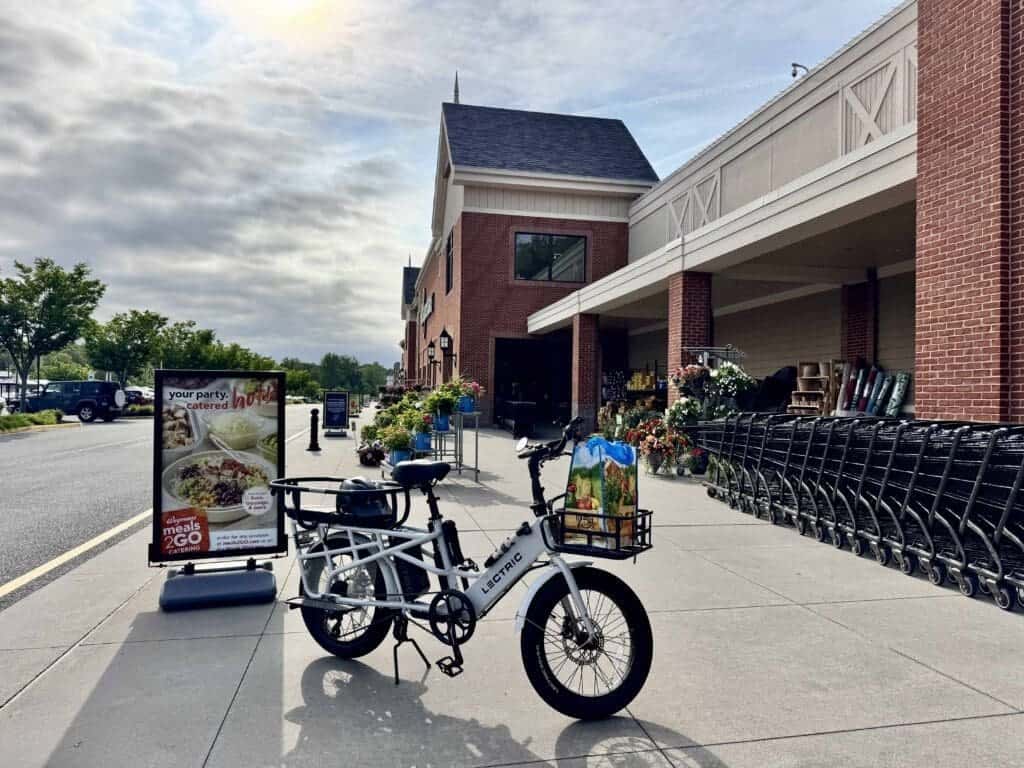
I have an e-bike. I love my e-bike. I ride it to meetings all over the City of Charlottesville instead of driving my car. e-bikes are great. A friend got an e-bike. He loves his e-bike. He has a different perspective, and I asked him…

Flipping the Switch, Part 3: ADUs, Zoning, and the Practical Guide
Flipping the Switch, Part 3: ADUs, Zoning, and the Practical Guide Part 1 covered the data. Part 2 covered the design. This week: the regulatory landscape, the ADU reality check, and the practical checklist. The ADU Conversation Has Changed When I wrote about this in…