
THE STORY
The Neighborhood the Trolley Built
Fry’s Spring is where Charlottesville first learned to commute. In 1890, S. Price Maury bought 170 acres surrounding the natural springs that gave the area its name and formed the Jefferson Park Hotel and Land Improvement Company. An electric streetcar line opened down Jefferson Park Avenue in 1891, and the Hotel Albemarle followed in 1892. The pitch was simple: ride the trolley out from downtown, take in the springs, and maybe buy a lot while you were at it.
The hotel didn’t last. It came down in 1913. But the neighborhood it seeded kept growing for the next seventy years, and in 1921 it gained the institution that still defines it. J. Russell Dettor bought land at the end of the line from the trolley company and opened the Fry’s Spring Beach Club, digging a concrete pool that was, for decades, the largest thing of its kind in the area. Through the 1920s and beyond, the club was the place Charlottesville went to swim, dance, and hear live music.
That long, gradual buildout is why Fry’s Spring looks the way it does. The Fry’s Spring Historic District, listed on the National Register of Historic Places in 2014, covers 150 acres and roughly 300 buildings developed between 1890 and 1963. You can read the decades street by street: turn-of-the-century frame houses near Jefferson Park Avenue, bungalows and Cape Cods from the 1920s through the 1940s, brick ranches from the postwar years.
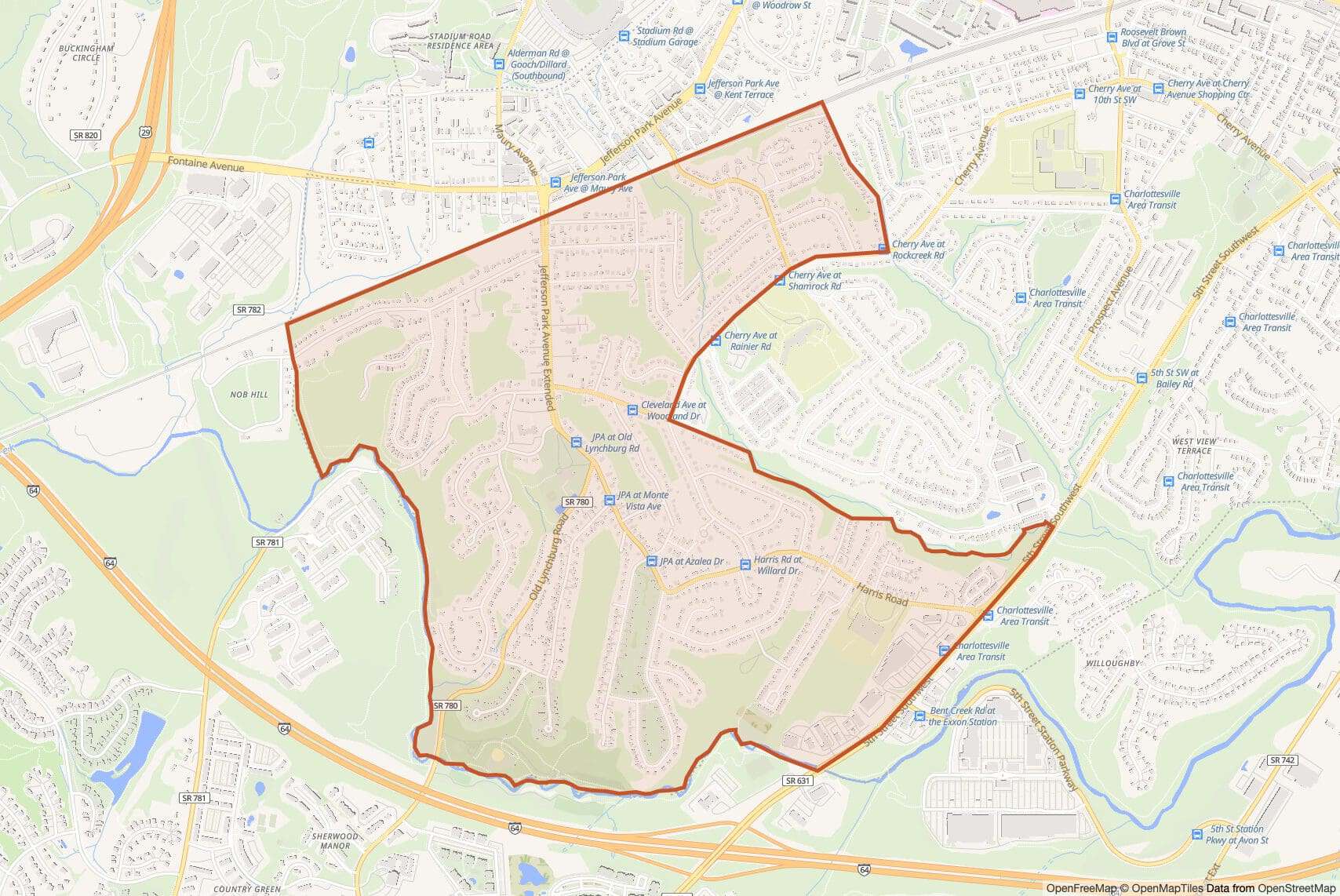
Today the streetcar is long gone, though the median on Jefferson Park Avenue Extended still traces its old alignment. What remains is a neighborhood that sits in the city’s southwest corner, minutes from UVA and the hospital, with the Beach Club still holding down the social calendar every summer.
TIMELINE
Fry's Spring Through the Years
-
1890
S. Price Maury buys 170 acres around Fry's Spring and forms the Jefferson Park Hotel and Land Improvement Company.
-
1891–1892
An electric streetcar line opens down Jefferson Park Avenue, and the Hotel Albemarle opens the following year, making Fry's Spring Charlottesville's first streetcar suburb.
-
1913
The hotel is demolished, but residential development along the trolley line continues.
-
1921
J. Russell Dettor opens the Fry's Spring Beach Club on land bought from the trolley company. Its concrete pool is the largest in the region for decades.
-
1920s–1960s
The neighborhood fills in decade by decade with bungalows, Cape Cods, and postwar brick ranches.
-
2014
The Fry's Spring Historic District, 150 acres and roughly 300 buildings, is listed on the National Register of Historic Places.
-
Today
An established neighborhood minutes from UVA and the hospital, with the Beach Club still serving as its social anchor.
CHARACTER
What It’s Like to Live Here
Architecture: Seven decades of building in one neighborhood. Turn-of-the-century frame houses sit near Jefferson Park Avenue, 1920s to 1940s bungalows and Cape Cods fill the historic district streets, and midcentury brick ranches round out the southern edges. Rolling topography, winding streets, and mature tree cover tie it all together.
The Beach Club: The Fry’s Spring Beach Club has been the neighborhood’s gathering place since 1921. It is a member swim club with a summer calendar of swim meets, live music, and events, and it gives Fry’s Spring something most Charlottesville neighborhoods don’t have: a genuine institution of its own.
The Location: UVA and the hospital are a short ride up Jefferson Park Avenue, the Downtown Mall is about two miles away, and Azalea Park and the Moores Creek trails sit along the southern edge. Most errands here involve a car, but the university side of daily life doesn’t have to.
The Vibe: Quiet residential streets with a front-porch, wave-to-your-neighbor rhythm, busier and more student-oriented closer to Jefferson Park Avenue, and settled in for the long haul everywhere else.