
THE STORY
Where Charlottesville Began
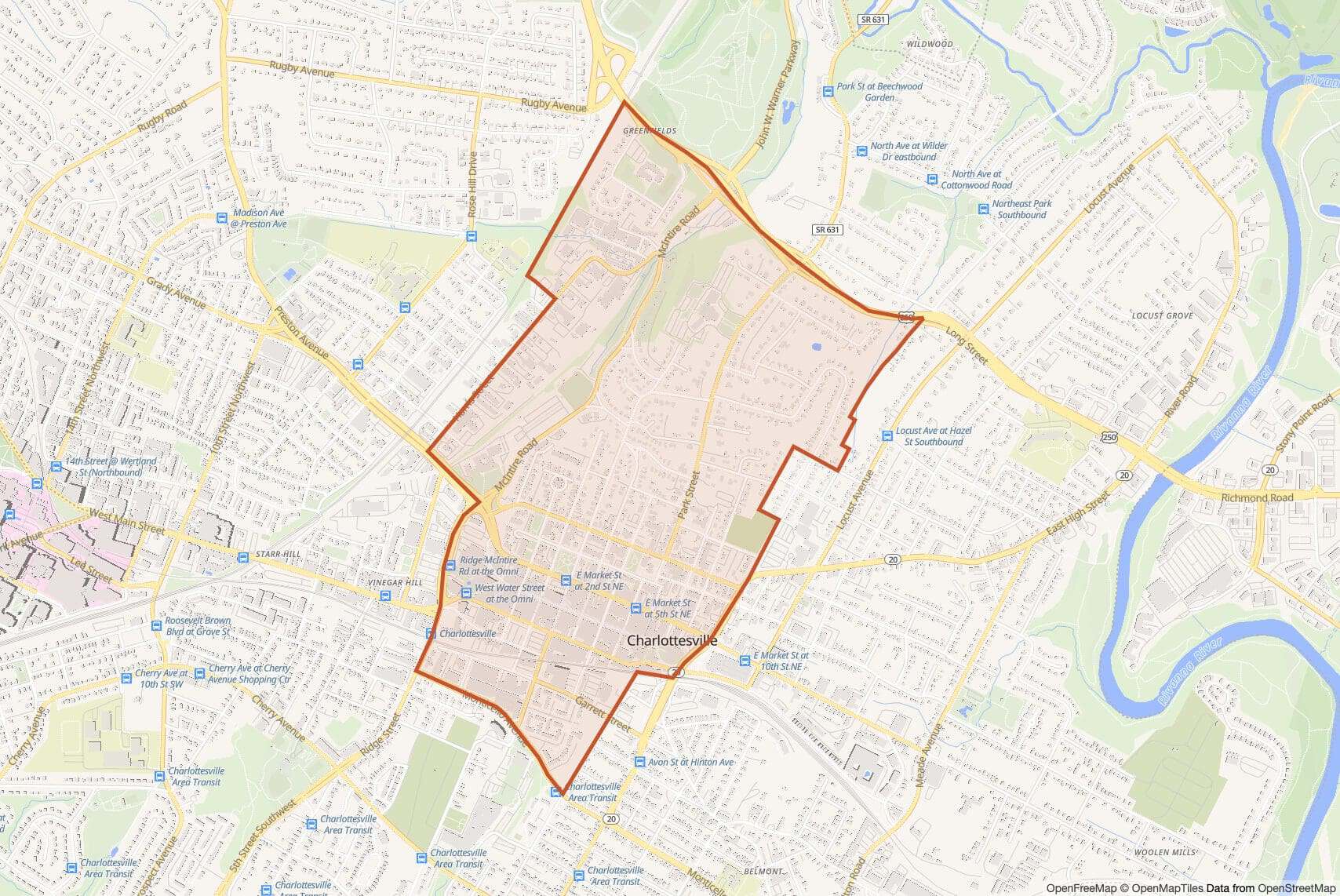
Every city has a first address. Charlottesville’s is North Downtown. The streets that fan out from Court Square trace the original 1762 town grid, and the courthouse green at its center is the oldest piece of public ground in the city — laid out, unusually, to imitate an English green, with houses turned to face it rather than the street.
For its first decades the courthouse actually sat just outside the town limits, on county land at the northern edge. The 1818 annexation known as “Anderson’s Addition” pulled it in, and the seed of downtown took root around it. The Federal townhouses, brick law offices, and Queen Anne cottages that went up over the following century are still here — many of them protected today as a National Register historic district and a local architectural design-control district.
What sets North Downtown apart from Charlottesville’s other historic pockets is that the history never became a museum. The houses are lived in. Lawyers still walk to the courthouse, residents still walk to dinner on the Mall, and the neighborhood remains the most walkable address in the city — which is exactly why it now commands some of its highest prices.
TIMELINE
North Downtown Through the Years
-
1762
Charlottesville is established; the original town grid is laid out around what becomes Court Square.
-
Early 1800s
The Albemarle County Courthouse and the brick buildings of Court Square take shape just north of the town line.
-
1818
"Anderson's Addition" annexes Court Square into the city, making it Charlottesville's first commercial and civic center.
-
Late 1800s–early 1900s
Residential build-out in Victorian, Federal, Colonial Revival, and bungalow styles fills the streets around the square.
-
Late 20th century
Court Square and the surrounding blocks are recognized as a historic district on the National Register and Virginia Landmarks Register.
-
Today
One of Charlottesville's most sought-after and fastest-appreciating in-town addresses.
CHARACTER
What It’s Like to Live Here
Architecture: A walkable catalog of two centuries of Charlottesville building — brick Federal townhouses, Queen Anne cottages with wrap-around porches, and Colonial Revival homes on tree-lined streets. Original hardwoods, tall ceilings, and working fireplaces are the norm. New construction is rare; the work here is restoration, and the design-control overlay keeps it that way.
The Walk: This is the most walkable location in Charlottesville. The Downtown Mall, the Paramount Theater, restaurants, the courthouse, and the City Market are all within a few minutes on foot. Residents routinely leave the car parked for days at a time.
The Vibe: Established and preservation-minded, where history commands a premium and a true walk-everywhere life is the everyday norm — tree-lined streets, historic streetscapes, and the Downtown Mall minutes away on foot.