… I don’t see “become a landlord” anywhere the the federal government’s enumerated powers.
Until the Federal Government stops trying to “fix” the housing market, recovery is going to be delayed. EVERYTHING they do injects uncertainty, fear, concern and uncertainty into the economy and housing market.
This stuff matters to the Charlottesville real estate economy, not so much because we have a vast backlog of foreclosures (I don’t think it’s vast) but because the housing economy, driven my national policies and lending and processes – real estate titling, real estate financing, robosigning, consumer sentiment is national. The national “# of home sales” are mostly irrelevant, but the systems are national.
But what do I know?
The WSJ notes on its opinion page:
The Fed also suggests having Fan and Fred weaken their standards for loan modifications and expand an existing refinancing program to include private-insurance-backed mortgages participate. But weak lending standards is part of what created the subprime mortgage mess. No wonder the mortgage bankers, the homebuilders and the rest of the housing lobby greeted the Fed’s white paper with enthusiasm. They’d love to see Fannie and Freddie more politically and economically entrenched so reformers can’t slowly reduce their market dominance.
The Fed will no doubt justify all of this by claiming that the larger economy can’t recover until housing does. Yet this confuses cause and effect. Housing recoveries don’t lead economic recoveries; they occur as part of the larger recovery as incomes begin to rise and consumer confidence grows. It’s precisely this “housing must save the day” mentality that caused the Fed to keep interest rates too low for too long after the dot-com bust and 9/11. This promoted the housing bubble and led to the mania and crash. By force-feeding a housing recovery, the Fed is misallocating resources that will make the expansion less durable.
Naked Capitalism has an excellent analysis with this telling summation:
Despite its efforts to muster data, this Fed is badly blinkered by the fact that it operates inside a club. Anyone who has done research in areas where the data stinks (and it does in the housing arena) will tell you you have to do primary research, but economists are allergic to that (Nobel prize winner Wassily Leontief found that less than 0.5% of the articles published in top economics journals were based on data developed by the authors). The Fed is unduly influenced by the view of people who are part of the problem, and it shows in this paper.
Government Set to Sell Foreclosures in Bulk (CNBC)
Fed: How Fannie and Freddie Are Hurting the Housing Market (archived: 2022) (CNBC)

Interested in Learning More?
Jim Duncan has been helping buyers and sellers in Charlottesville’s neighborhoods for 25 years. Get local insight born of experience.
Dig Deeper

Revisiting the “0 to 5 Buyer is Gone” Post – 15 years later
Revisiting the “0-5 Buyer Is Gone” Theory We’re in a different market now. Some of the people who bought between 2021 and 2024 are trying to sell — and the ones who bought new construction, now competing against new construction, are having a hard time.…
A Charlottesville e-bike Success Story
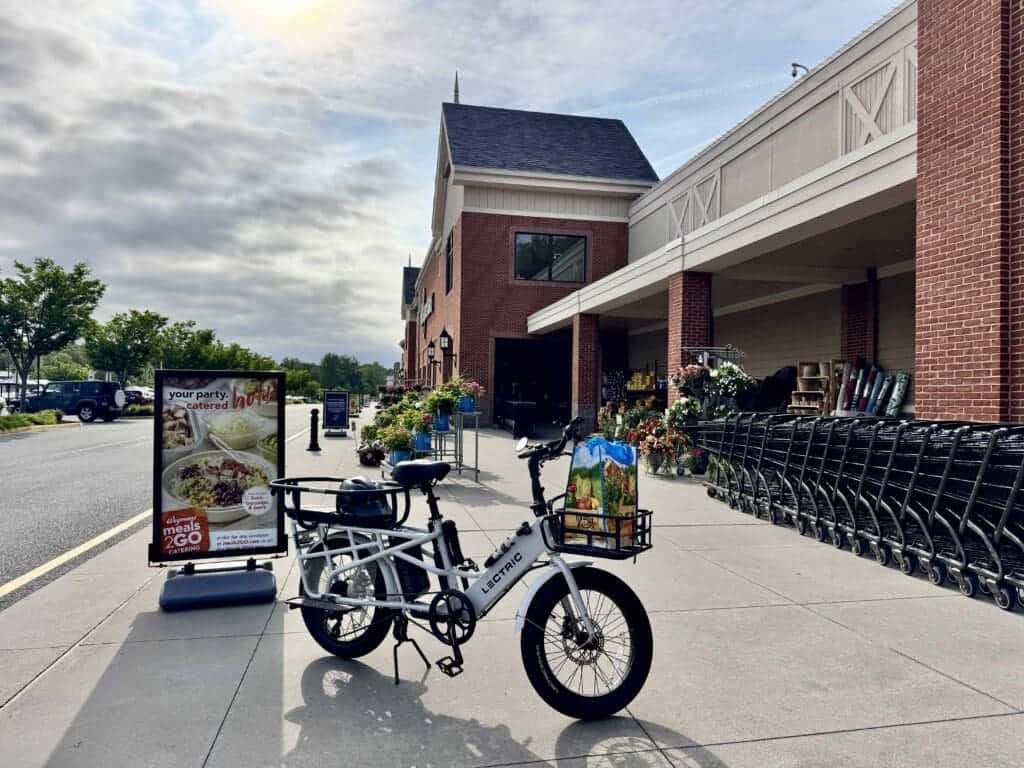
I have an e-bike. I love my e-bike. I ride it to meetings all over the City of Charlottesville instead of driving my car. e-bikes are great. A friend got an e-bike. He loves his e-bike. He has a different perspective, and I asked him…

Flipping the Switch, Part 3: ADUs, Zoning, and the Practical Guide
Flipping the Switch, Part 3: ADUs, Zoning, and the Practical Guide Part 1 covered the data. Part 2 covered the design. This week: the regulatory landscape, the ADU reality check, and the practical checklist. The ADU Conversation Has Changed When I wrote about this in…

Happy Homeownership Day (on a bicycle)
A good day starts with a bike ride. A better day starts with a bike ride to meet clients for a final walkthrough of their first home. Smile, happiness, projects to be undertaken, projects to be planned, lives to be lived. It's a good day.…